
Union County Criminal Docket Searches
Indiana MyCase is the main remote way to run a Union County criminal docket search. If you know an exact case number, citation number, or cross reference, open the Case tab. Then enter just one identifier. No number in hand? Use the Name tab instead. Choose Union County and pick CR Criminal & Citation. Add open or closed status plus a filing range when that helps.
- Try the exact case number, such as the illustrative 81C01-2608-F6-000001.
- If needed, retry without hyphens or leading zeroes.
- For a ticket-origin case, use its citation number.
- Open the result and read the header, charges, bond, CCS, and disposition in order.
- Ask the Clerk for a missing public document or certified result.
The Public Court Calendar is a separate hearing tool.
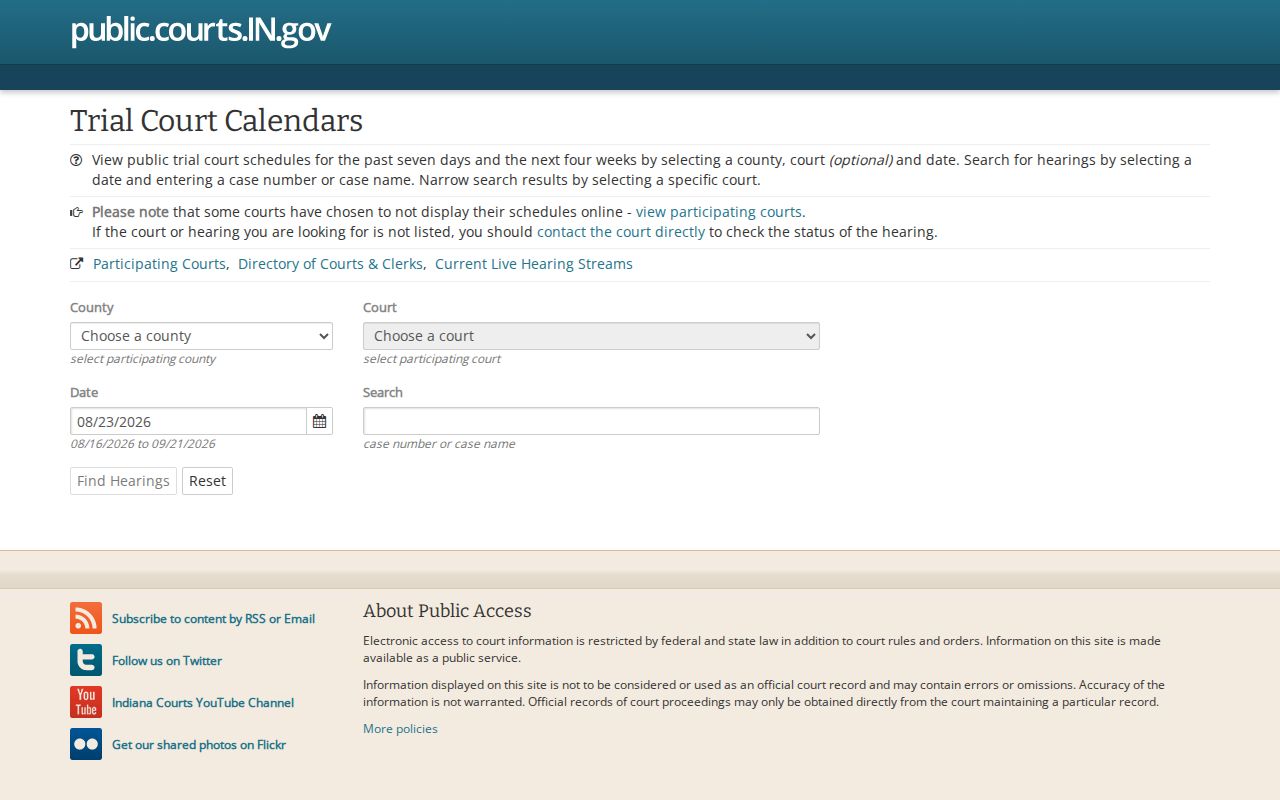
Union has no participating calendar court. Use the CCS and the court phone for a current setting.
Union Criminal Codes and Case Types
Every criminal case filed in Union County carries a number starting with 81C01. Union Circuit Court is the only court of record listed for the county. The letters that follow tell you the case type. Current codes include CM for a misdemeanor. F1 through F6 cover the six felony levels. MC covers miscellaneous criminal matters, while MR marks criminal-related ones. Older Indiana filings may show CF, FA, FB, FC, or FD instead. Traffic and ordinance cases run under IF, OE, or OV.
- CR
- MyCase filter for Criminal & Citation.
- CM
- Current misdemeanor case code.
- F1-F6
- Current felony-level case codes.
- MC
- Miscellaneous criminal case type.
- CCS
- Chronological Case Summary, the docket event history.
Codes can narrow a docket search, yet they prove nothing about a charge. Read the current charge and disposition fields yourself.
Criminal Dockets: What They Show
Open a Union County criminal docket and you start with the case header. From there it can grow into much more. Parties and counsel, the charges, bond entries, dated CCS events, hearings, sentence details, and financial data can all appear. Even so, the public index is selective. Personal details may be redacted. A listed event may also lack an online document even when the Clerk holds the filed item.
| Header | Case style, number, court, type, filed date, status, and related-case data. |
|---|---|
| Charge | Number, offense date, description, statute, degree, and filed-as degree. |
| Bond | Posted date, type, amount, number, and status. |
| CCS Event | Date, description, file link, cancellation, result, and judicial officer. |
| Sentence | Reason, offense, fines, confinement, credit, suspension, and conditions. |
| Financials | As-of date, charges, credits, payments, and displayed balance. |
MyCase warns its balance display may miss interest or recent Clerk changes. For a current figure, ask the Clerk.
Reading Union Criminal Outcomes
Status and outcome are not the same thing. A docket marked closed is simply inactive in the usual sense. It tells you nothing about the charge. It does not say whether it was dismissed, resolved by plea, tried, transferred, or later reopened. A plea entry can appear before the sentence does. And when a charge is amended, the original filed-as text may sit right beside the later description. So read both.
| Term | Safe reading |
|---|---|
| Dismissed | Read the charge-level entry and whether the order gives conditions. |
| Plea | Look for the later judgment and sentence. |
| Sentenced | Read the charge, term, credit, suspension, and conditions together. |
| Warrant or FTA | Do not infer current status without official confirmation. |
| Vacated or Reopened | Continue through later CCS events. |
A bond entry does not prove current release status, so contact the Clerk when that fact matters.
Criminal Case Stages on the Docket
The usual reading flow is Filing → Initial Hearing → Pretrial → Plea or Trial → Disposition → Sentencing. A real Union County criminal docket may not follow a neat line. Motions, amended charges, discovery events, resets, warrants, bond review, or a dismissal can change the route. Read by date and connect each event to the charge it affects.
Union local rules place appointed-counsel and indigency questions at the initial hearing. They are ordinarily addressed there. Criminal discovery deadlines run from the date defense counsel appears. Exceptions and court orders can shift them, though. A pretrial conference may happen at that first hearing or later, at the court's direction. Keep in mind these rules describe procedure, not the result of any case.
Union County Pretrial Details
The Union local criminal rule adds useful context to a CCS. Automatic discovery from the prosecutor is due within 30 days after defense appearance. The defense response is due within 10 days. Discovery should be done, as far as possible, five days before pretrial. Motions and exceptions can shift those points. So a CCS discovery event marks case work, not a finding of guilt. The rule also expects the prosecutor, defense lawyer, and accused person at a criminal pretrial. Any of them may be excused. Nonattendance can affect bond or bring a warrant. An incarcerated person is not transported unless ordered. When a docket says pretrial, that is not the trial itself.
Union County Criminal Docket Courts
Union Circuit Court 81C01 holds the county criminal docket. The local caseload plan calls it the only court of record. Every case files through the Union County Clerk's Office. The current court directory lists no Union Superior, city, town, or justice court. The Odyssey list shows none either. So a Liberty or West College Corner address does not prove a municipal-court case. Union Circuit Court sits on the south side of the third floor at 26 West Union Street in Liberty. The phone is 765-458-5934. The Clerk is on the first floor at the same address. Court staff confirm schedule information, and Clerk staff hold the filed records.
Union Criminal Record Channels
MyCase is only the first channel. The Union County Clerk can provide counter access to nonconfidential files. The access rules still apply. Call 765-458-6121, or confirm whether a request can go to clerk@unioncountyin.us or fax 765-458-5263. The office offers no dedicated docket mail form, dropbox process, or public court terminal. Ask before sending payment or traveling.
- MyCase for the public summary and CCS.
- Clerk counter for nonconfidential inspection.
- Phone, confirmed email, fax, or mail for a focused request.
- Clerk or court reporter for a certified copy or transcript.
- OJA for a legitimate bulk or compiled-data request.
An APRA request should identify the case number, item, date range, court, and desired format. Federal PACER covers only federal cases, not a Union state file.
image_after
Check the index before relying on any summary of an excluded category.
Access Rules for Criminal Dockets
Criminal dockets in Indiana's Rules on Access to Court Records stay public by default, with limits set by court rule.
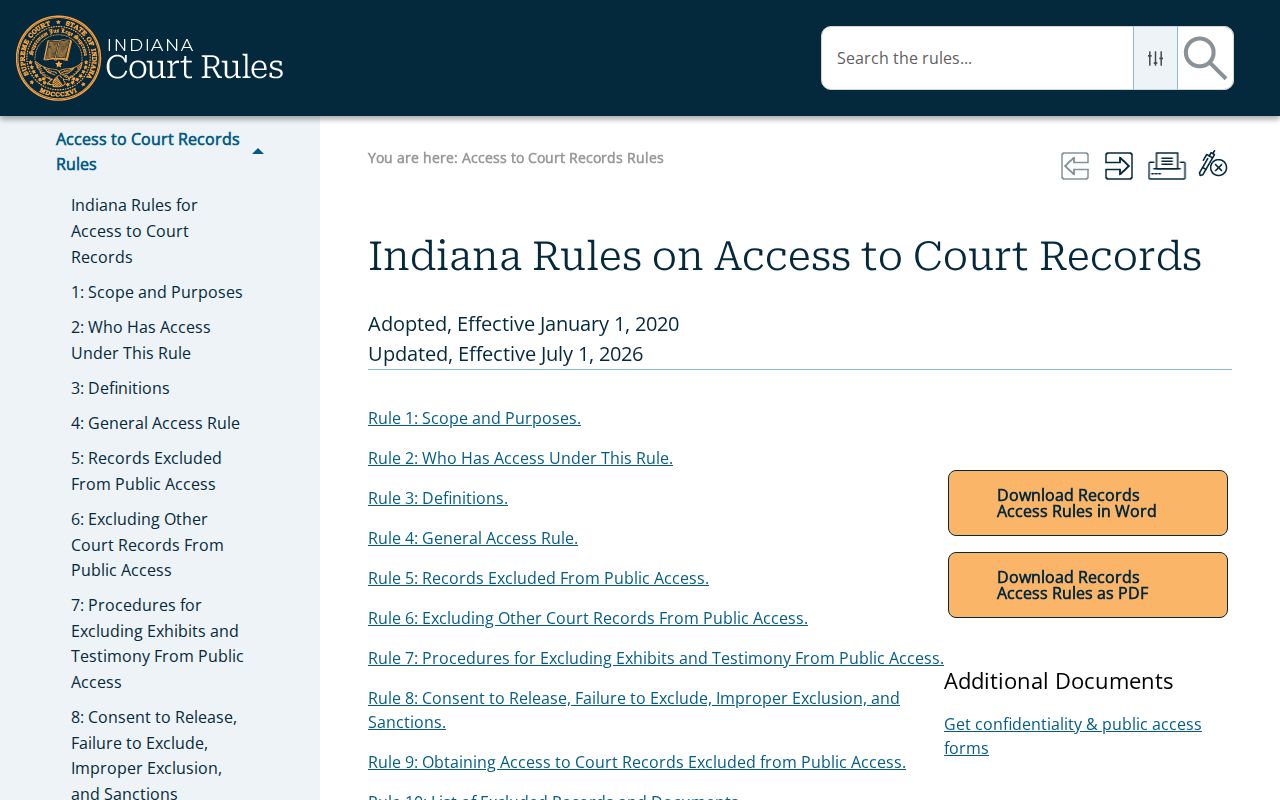
Check the index before trusting any summary of an excluded category.
Access Rule 5 excludes defined cases, files, and identifiers. Access Rule 9 provides a formal, court-controlled request route for excluded records. Administrative Rule 9 distinguishes remote access from the official court record.
Restricted categories can include sealed or expunged matters, juvenile records, medical or treatment files, investigative records, and specified victim or witness data. A missing public result means not found remotely. It is not proof that no case exists.
Union County Public Document Limits
The Public Access to Court Documents table varies remote access by case type and reader role.
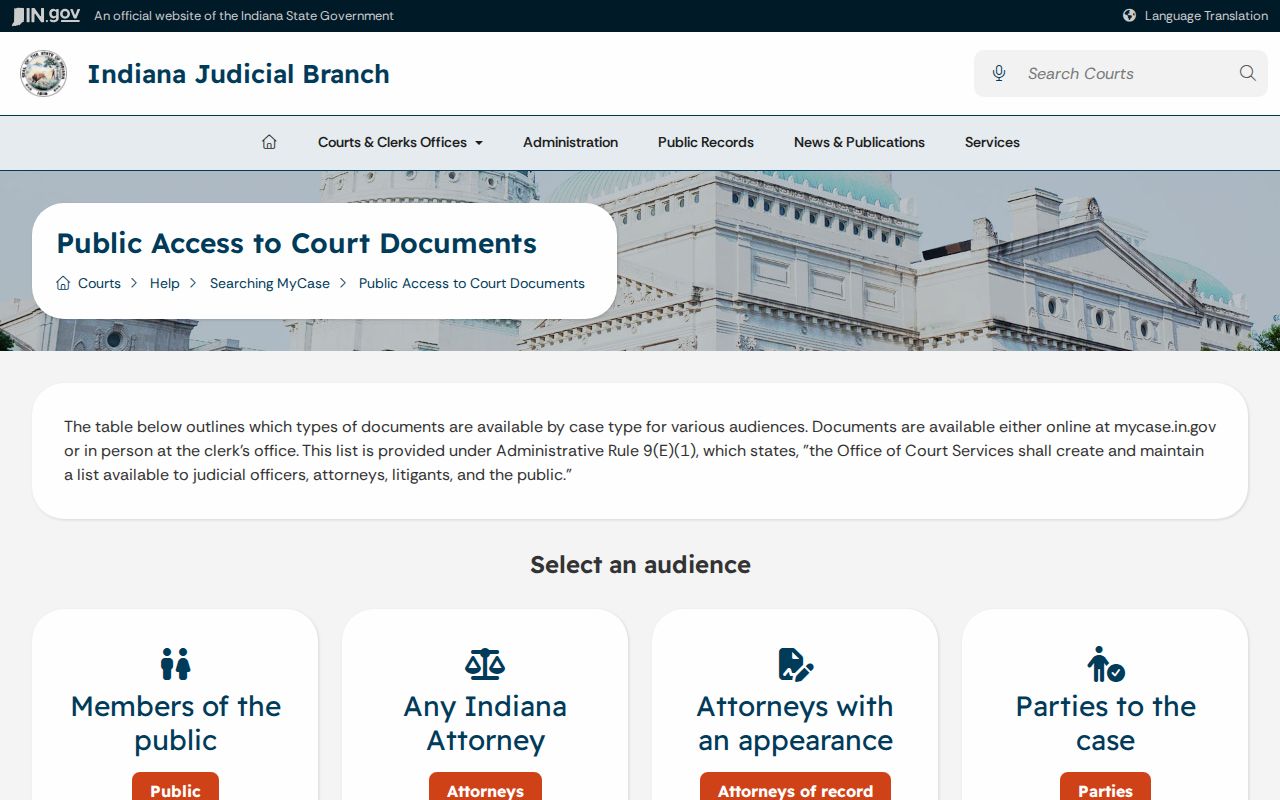
For public F1 through F6 cases, a sentencing order may show up online even when the rest of the file stays off the screen. Most public nonconfidential material remains viewable at the courthouse in person instead. The Indiana Public Records page points to MyCase, to the local Clerks, and to the proper bulk-data channel for heavier needs.
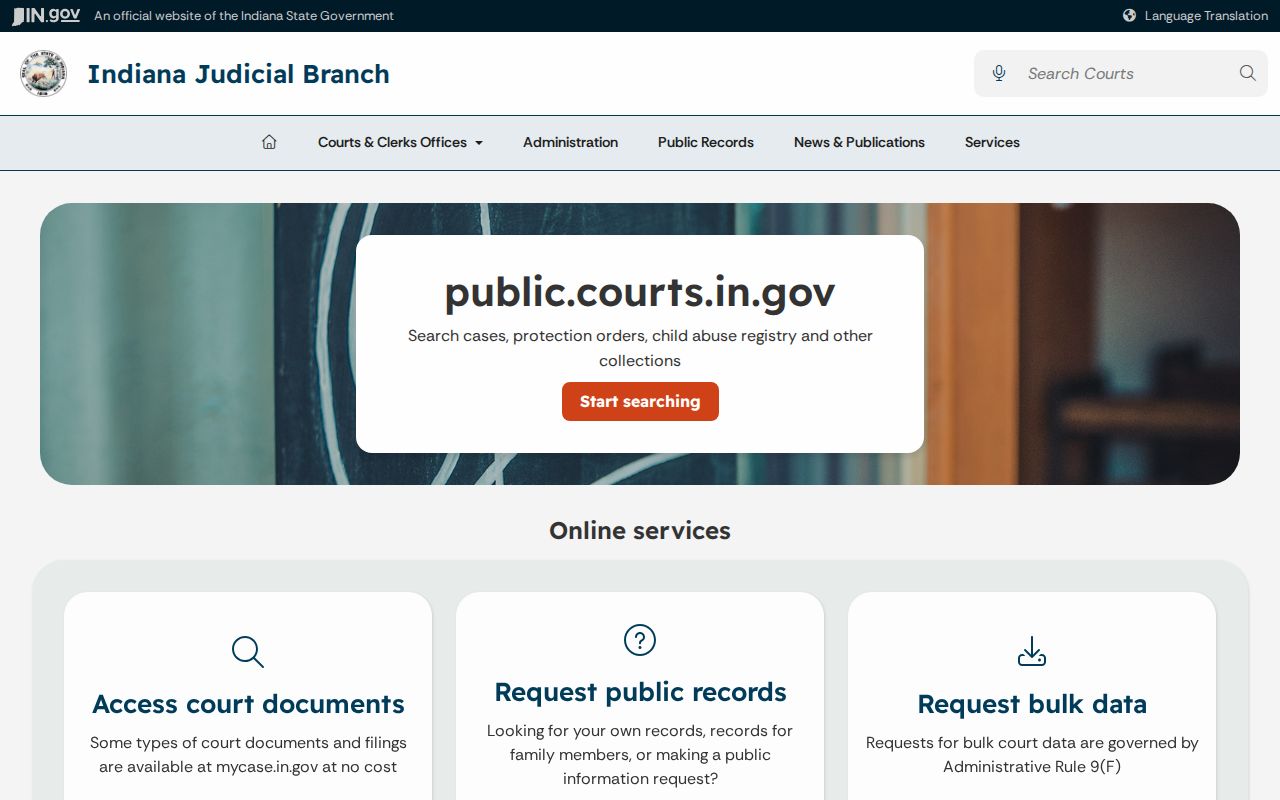
Use that route rather than assuming every filing in a docket should be downloadable from a case summary.
Union County Specific Record Requests
Union County's public-record page tells requesters to name the responsible office and describe the records with care.
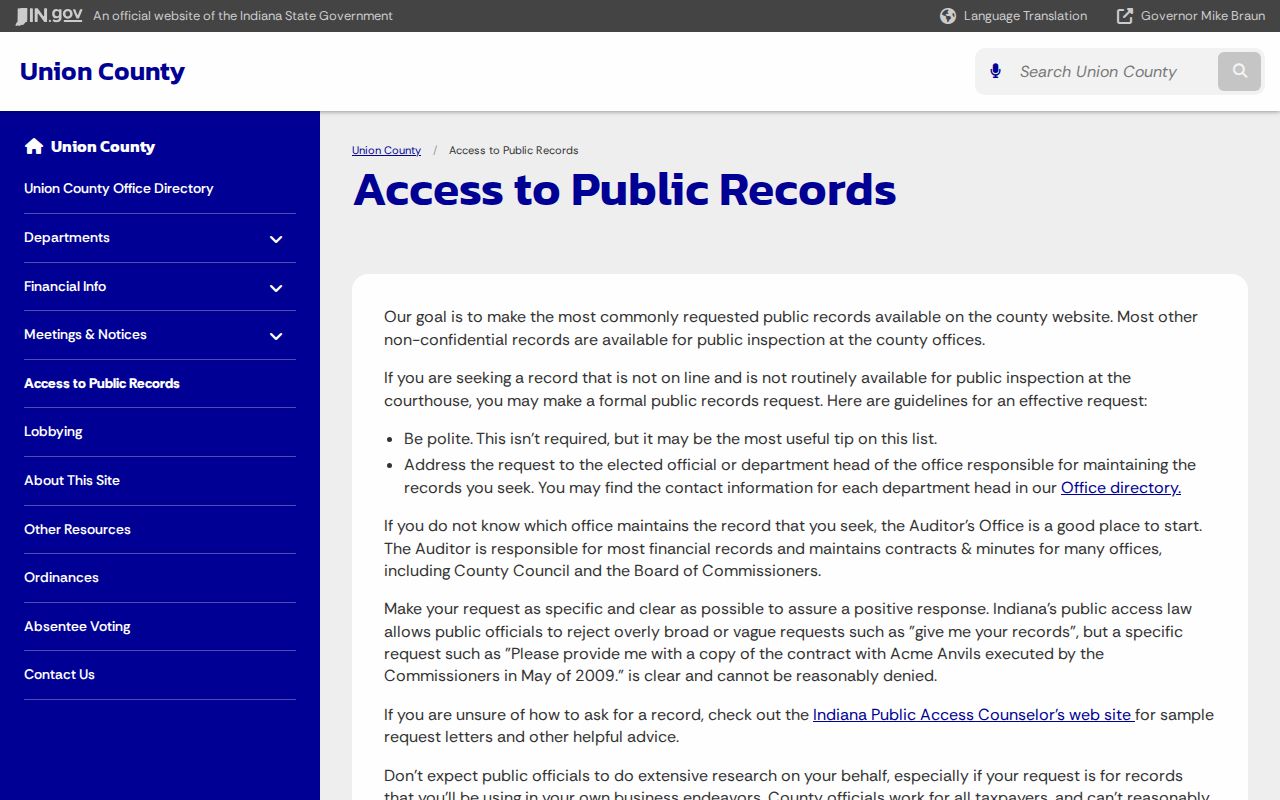
A broad request may push you toward courthouse inspection, and copying costs can apply. For a criminal filing, send the request straight to the Clerk. Do not route it through a general county office. Include the case number, document title, and date range. Name the exact charge or CCS event if it matters. Say whether you need a plain or certified copy. Ask about page count, postage, accepted payment, and delivery before you commit.
Transcripts take more detail than a docket copy. Name the hearing or trial date, the judge, the type of proceeding, and the case number. Say whether a new transcript must be prepared. The local reporter rule sets a maximum per-page rate, a minimum charge, and a copy rate. Expedited expense is added on top. Get a quote from the Clerk or reporter before any work starts. Indiana Code 5-14-3 provides the state's Access to Public Records Act framework.
A narrow, specific request serves you better. Skip the demand for every record tied to a broad name. If a record is excluded, ask whether a public redacted version exists. Do not fish for private identifiers just to test whether a case is real. Handle any denial or limit through the official statute and court-rule process. Do not settle for a third-party copy.