
Union County Civil Docket Searches
Indiana MyCase is the easiest place to start. Pick the Case or Name tab, filter down to Union County, and choose CV Civil, FAM Family, or PR Probate as needed. An exact case number works best. A party or business name can substitute when the number is unknown, but check the caption and case type before reading anything into an event. MyCase pulls from Odyssey and displays nonconfidential public information only. The Clerk's official record remains the final word. For local help, contact Susan Ray, the Union County Clerk. Her office sits on the first floor at 26 West Union Street in Liberty, Indiana 47353. Call 765-458-6121, email clerk@unioncountyin.us, or fax 765-458-5263. Confirm the office accepts that request type by fax first. Ask about mail or dropbox options before sending papers or payment. The clerk sets those procedures.
- Open MyCase and choose Case or Name.
- Select Union County and the fitting civil category.
- Enter one case identifier or the permitted name fields.
- Check the caption, type, status, and filed date.
- Read CCS events in date order and request official copies from the Clerk.
Union Civil Case Number Codes
Every Union County civil case number starts with 81C01, the identifier for Union Circuit Court. Indiana Administrative Rule 8 sets one uniform pattern statewide, so the number carries the county code, the court code, the filing year and month, a case type, and a sequence. Take 81C01-2608-CC-000002 as an example. It is made up, not a live case. The middle letters tell you what kind of dispute it is: CC, CT, SC, MF, DC, DN, DR, ES, EU, GU, and TR cover collections, tort, small claims, mortgage, domestic, estate, guardianship, and trust matters.
Hyphens and leading zeros help a MyCase search. The rules do not insist on them. You can type a case number without hyphens. Just remember the number is a locator for the Union County court docket entry, not a summary of the claim itself. The official numbering rule illustrates those uniform parts.
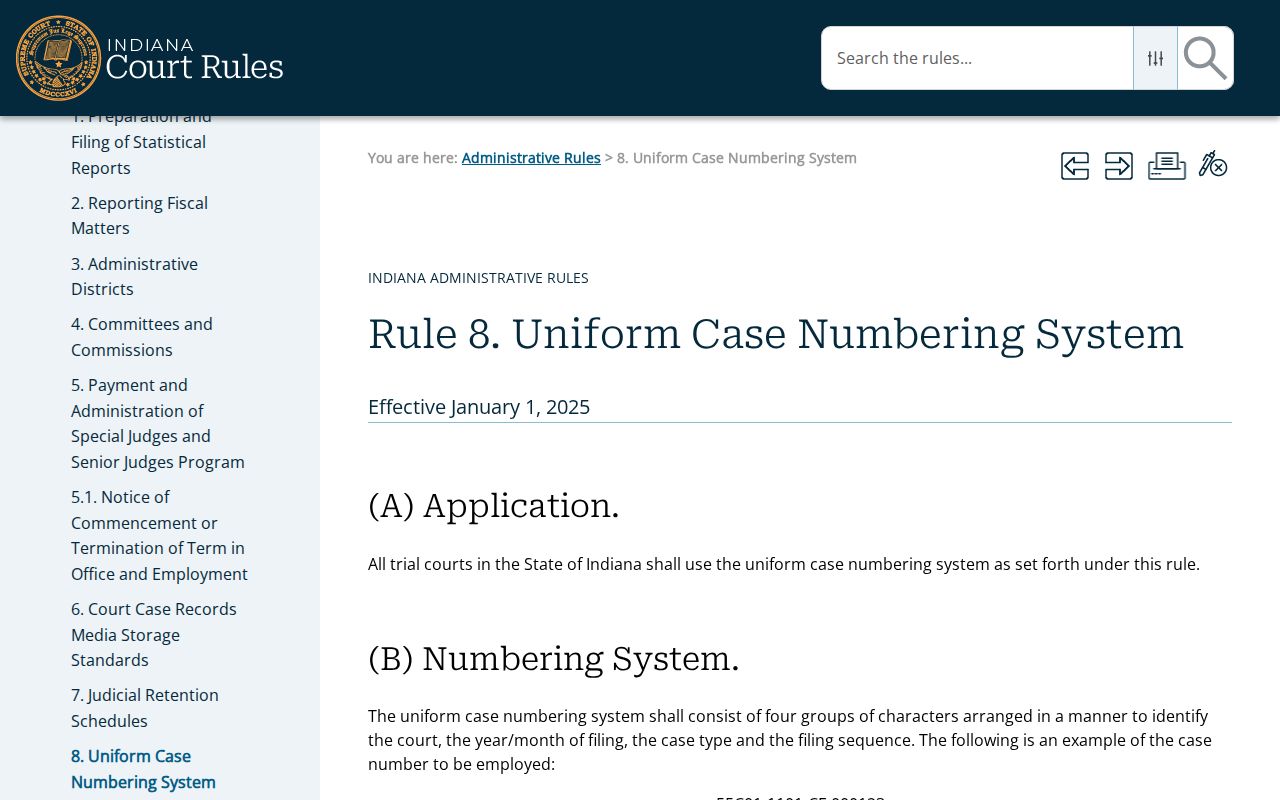
That structure does quiet work. It separates an 81C01 case from one filed in another county or court, while the type letters and sequence stay attached to the filing.
Union Civil Dockets: What They Show
A civil Chronological Case Summary, or CCS, lines up every indexed event in time order. The header gives you the essentials at a glance. Court, case number, case type, filed date, status, and status date all sit there. Party roles, attorney appearances, service events, motions, orders, hearings, and financial entries follow. They appear as they occurred. A document icon on an entry means a public copy can be opened online. No icon does not prove the filing does not exist. The Clerk holds the official file. Ask there.
| Header | Caption, court, number, type, filed date, status, and flags |
|---|---|
| Parties | Role, name, attorney role, and public contact fields where available |
| Filings | Complaint or petition, answer, motions, service, and linked papers |
| Hearings | Date, session, reason, result, cancellation, and judicial officer |
| Outcome | Judgment, dismissal, decree, verdict, order, or appeal event |
Be careful with the word "Closed." It is a status, nothing more. The docket does not tell you whether the case ended by judgment, dismissal, settlement, transfer, or some other order. A granted motion can be interim too, not the final word on the case.
Union County Civil Filing Paths
Civil cases reach Union County through Indiana's statewide e-filing system, which accepts papers submitted by certified electronic filing service providers. Attorneys have to e-file here. Self-represented filers are welcome to use it too. The Clerk and the official forms repository still matter for getting the procedure right. One caution: the ability to file is not the same as the ability to view. Just because an account lets you submit a document does not mean every restricted filing in that Union County court docket becomes public. For current official forms, the Indiana court forms repository is the public-access route, and it shows the versions in use now.
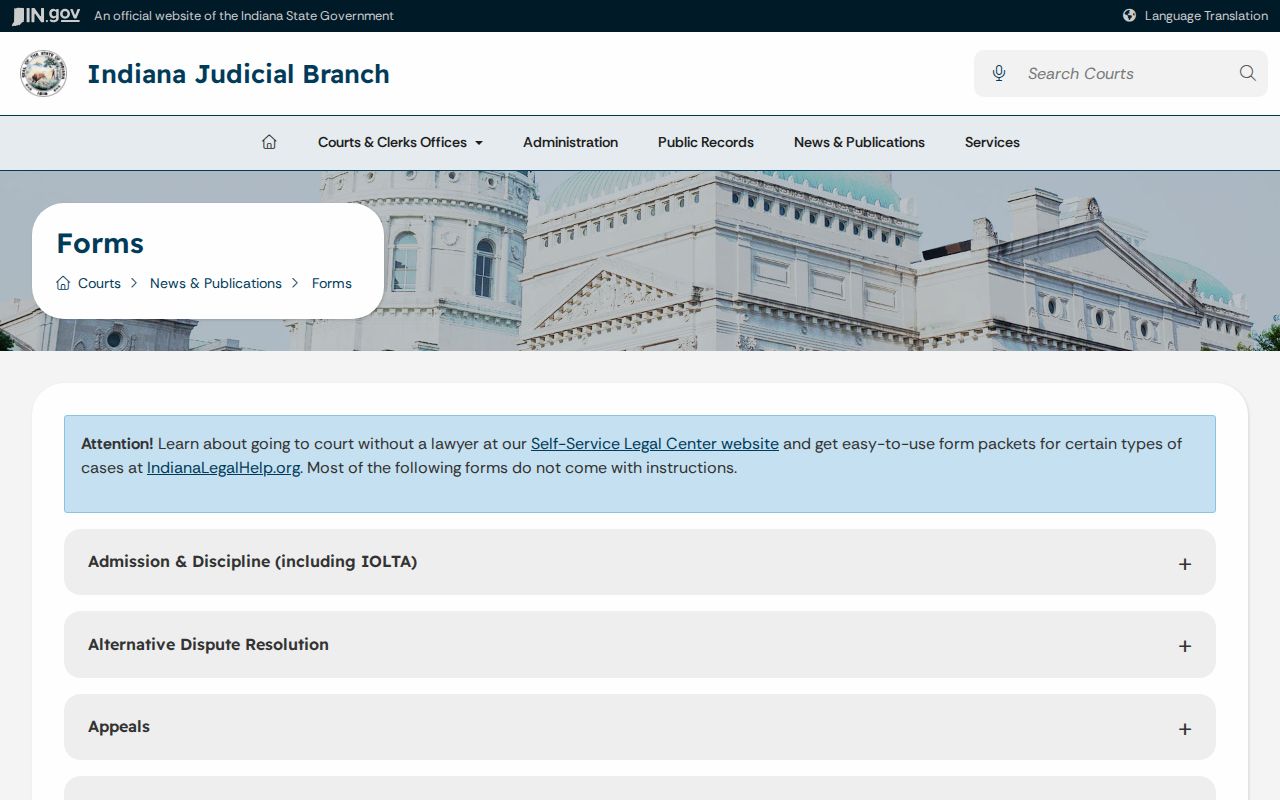
That repository beats borrowing a stale form from an old case file. Court forms and their instructions change over time, so a fresh copy is the safer bet.
What Cases Fill the Civil Docket
Union Circuit Court is the only court of record listed for Union County. Its civil docket is broad. Contract disputes, probate, and family matters all land on the same court's calendar. MyCase sorts case searches into CV Civil, FAM Family, and PR Probate, and finer case codes identify each filing beyond those groups. Access rules shift with the category. A probate or domestic entry deserves more care. Not every filing sits open like an ordinary contract case in the Union County civil docket.
- Collections, contracts, and other CC matters
- Tort and personal-injury cases, including CT matters
- Small claims identified by SC
- Mortgage and foreclosure-related MF matters
- Domestic, probate, estate, guardianship, trust, and protection matters subject to their own limits
No separate civil court for Liberty or West College Corner appears in the court directory or the Odyssey list. Small claims and other local civil matters simply run as case types inside Union Circuit Court.
Union Civil Case Management
Union County handles personal-injury and medical-malpractice suits with an extra step. Local rule LR81-TR00-9 makes a case-management conference mandatory. The plaintiff must set it within 120 days after filing the complaint. It is 30 days if the court orders otherwise. Once everyone sits down, the parties work through witnesses, documents, other evidence, settlement information, discovery timing, and how complex the case is. A joint case-management order then lands within 10 days after the conference.
Watch the docket closely here. Entries from this stage are procedural, not final. A conference date on the Union County civil docket does not mean trial has begun. Neither does a discovery deadline. The local rules also set up a civil special-judge rotation drawing on courts in Wayne, Fayette, and Rush Counties. That regional rotation does not add a new Union County trial court. The Clerk keeps the rotation list. Union Circuit Court stays the only local court of record.
Hearings on the Civil Docket
A civil hearing entry tells you less than it seems. Pair it with the CCS and the current Union County court schedule. Entries can list the date, session, reason, judicial officer, result, comments, or a cancellation. A setting might cover a motion, a case-management conference, or settlement work. It could be a trial. It could also be another procedural step. So never assume every setting is a trial date.
The Indiana Court Calendar does not list Union as a participating court. That gap proves nothing about whether a hearing exists. Check MyCase first. Then call the Clerk at 765-458-6121. Or try Union Circuit Court at 765-458-5934. Ask about the current room, any reset, a cancellation, or same-day details. The fuller Union County court schedule walks through that fallback chain. And remember, a reset only moves the event. It never dismisses the case.
Union Civil Records Online
Union County civil records sit under Administrative Rule 9. The rule sets the terms for remote access. It covers daily calendars, dockets, and compiled data. The line it draws is simple: convenient online viewing is one thing. The official court record is another. A public CCS entry can help you spot a filing. For certified or accuracy-critical copies, though, the Clerk is where you turn.
Bulk or compiled requests take a different path. The Office of Judicial Administration handles those, not automated extraction from MyCase. The official remote-access rule describes those public and compiled-data boundaries.
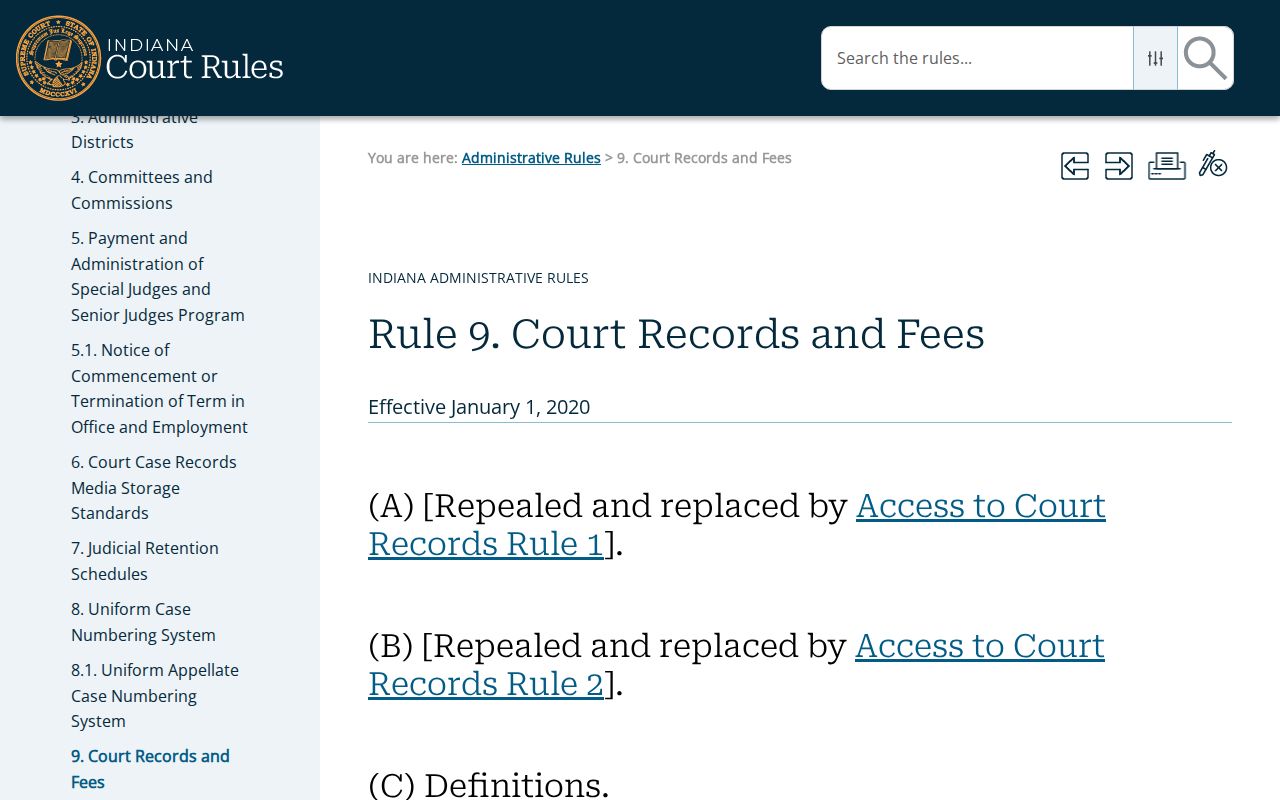
That is the practical takeaway. An online result works as a helpful index, but a clerk-certified civil record remains the document to rely on.
Who Can See Civil Dockets
Indiana starts from a presumption of access to court records. Statutes and court rules then carve out the exceptions. The stated purpose in Access Rule 1 ties public access to the Access to Public Records Act.
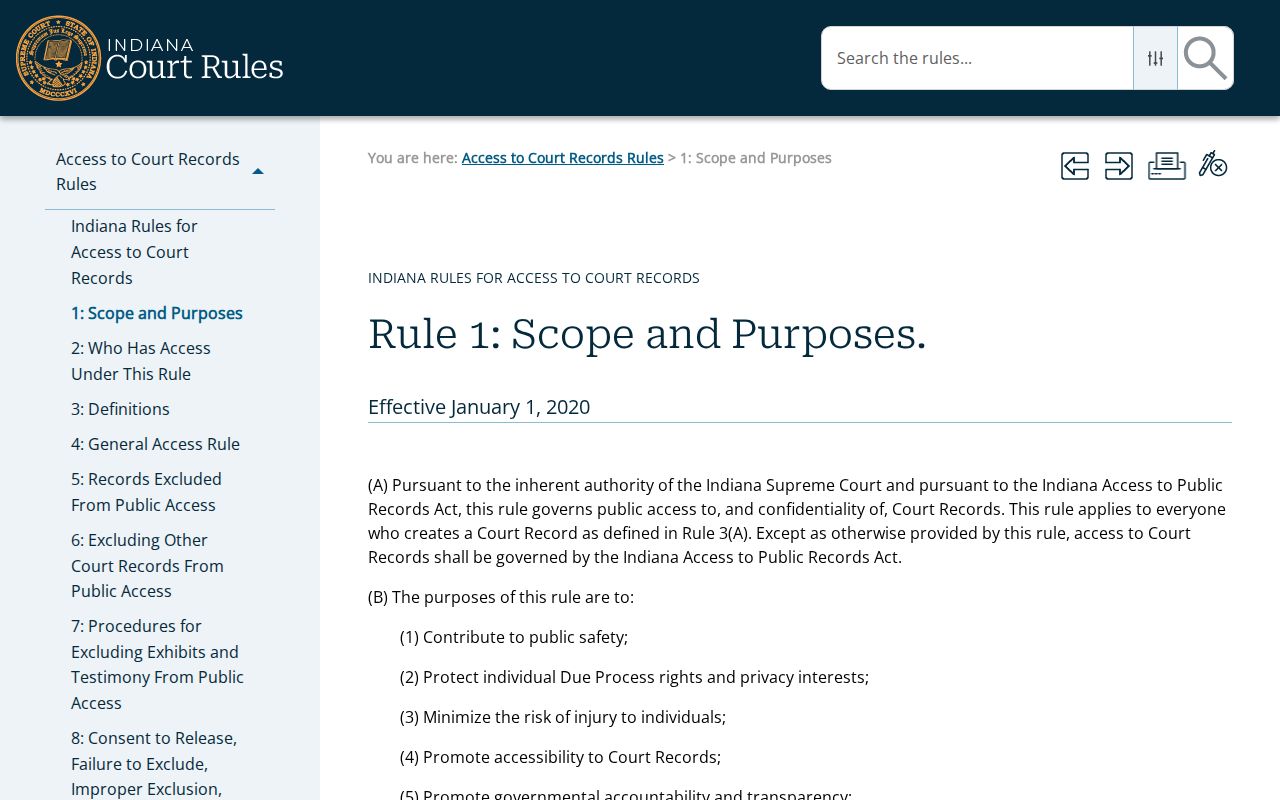
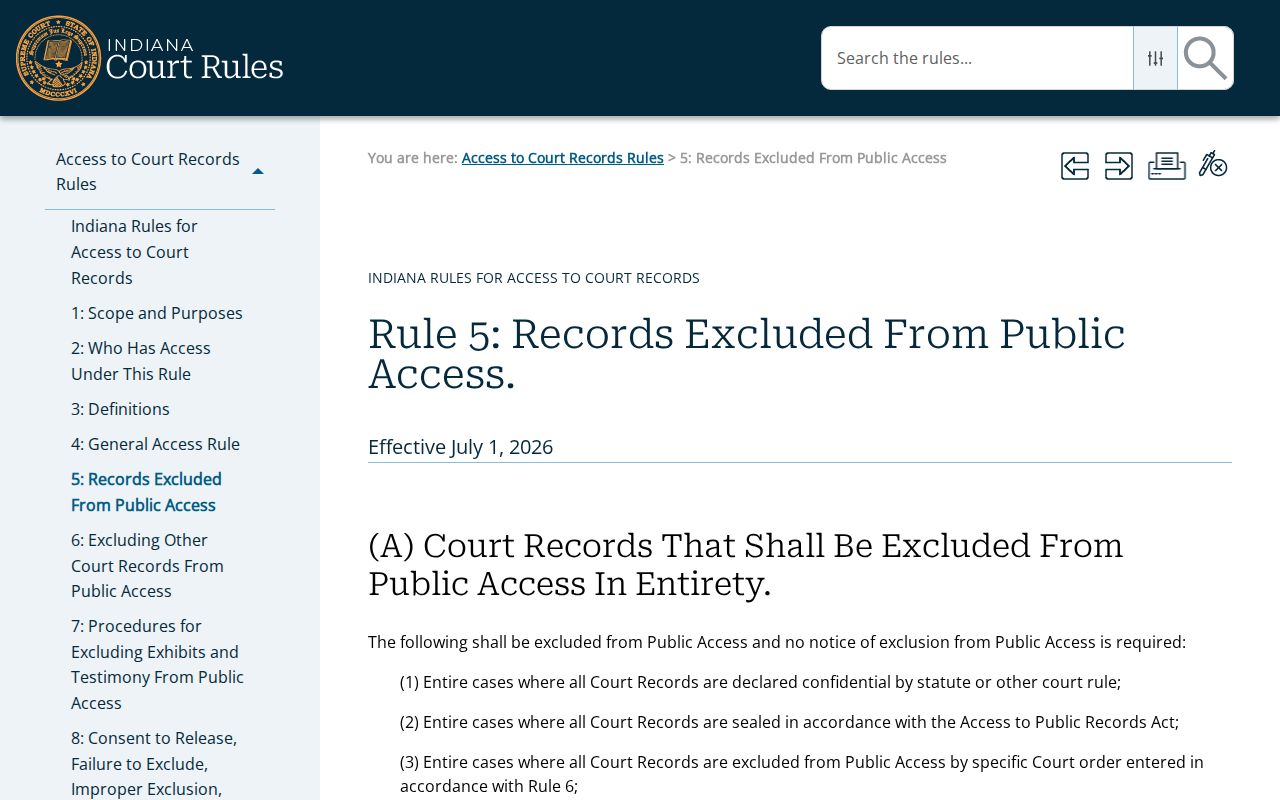
Openness has limits. Sealed cases, juvenile matters, medical records, protected identifiers, and many family and protection-order records stay out of public view. The list in Access Rule 5 covers confidential cases, excluded documents, and required redactions.
A missing result can mean several things. The rules may bar it, the file may be older paper, or no public link may exist. Don't guess about a case from a gap.
Access rules: Indiana Code 5-14-3 requires a reasonably particular request and permits lawful exceptions. Access Rule 5 controls exclusions and redaction. Administrative Rule 9 governs remote and compiled access.
Restricted Union Civil Record Requests
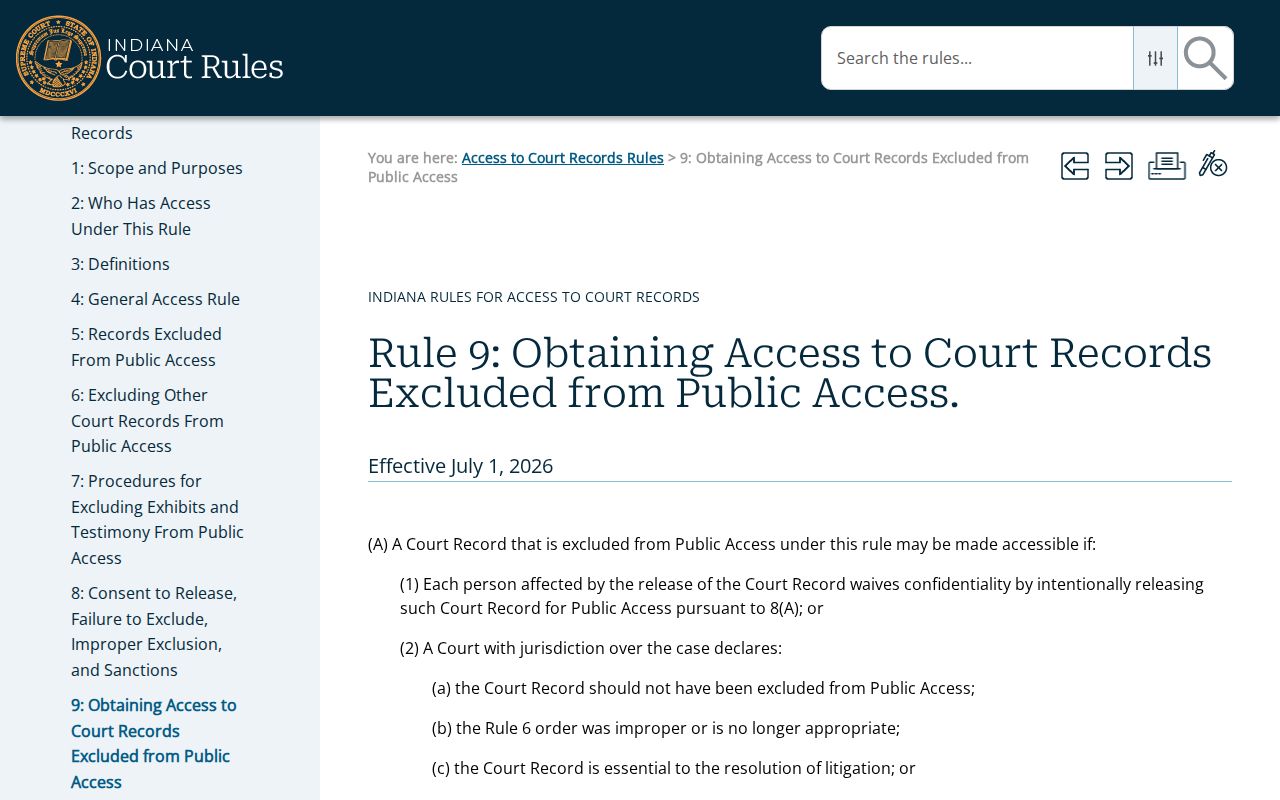
Want a record the rules exclude? Access Rule 9 offers a formal waiver or declaration route. It takes a verified written request and notice. There is also a response period. Sometimes a public hearing and a written order follow. The standard is clear and convincing evidence. This is no informal search override. The official waiver rule lays out that court-controlled process.
The court can still say no. It can also grant access with conditions. Identify the record precisely and follow the rule. Don't expect the Clerk to hand over excluded material at the counter.
For an offline public record, send a specific request to the responsible office. Indiana's Access to Public Records Act governs that route. The Union County request page advises a clear scope. It also expects payment of reproduction costs. Need a certified judgment, decree, payoff, or historical file? Contact the Clerk. Ask about accepted delivery and payment before you mail anything. Also ask about a courthouse terminal, since none is guaranteed.
Union County Civil Copy Requests
A search result can name the paper you need without showing its full text. Ask the Clerk for a plain or certified copy. Describe the case number, document name, and filing date as precisely as you can. Certification pays off when an authenticated court copy is required. A transcript is different. It records spoken proceedings and follows the official court-reporter process. And don't read the online financial panel as a current judgment payoff. Interest and recent adjustments may be missing.
Confirm a few things before sending anything. Which delivery method is accepted? What are the copy charge, certification charge, and payment form? Union posts no fixed mail or dropbox routine, so ask first. A clear request also keeps four items straight. Tell apart the docket index, a filed document, a certified judgment, and a hearing transcript.
Union County Civil Search Checks
Tiny query changes can shift your results. In a party-name search, a trailing wildcard can follow a letter or number. Sounds-like searching cannot combine with that wildcard. A business name sits in its own field. Status and filed-date filters can narrow a common name. They can also hide the right case when your dates or open-versus-closed assumption is wrong.
Before opening the CCS, check the court, caption, type, and filed date. No luck? Remove the uncertain filters, retry the exact number without punctuation, or ask the Clerk. A missing public result never proves there was no case.