
How the Union County Court Calendar Works
The Indiana Court Calendar posts daily schedules. The courts that appear there use Odyssey and choose to take part. You can search back seven days and ahead four weeks. Each result can include the date, start and end times, time zone, case number, caption, court, reason for the hearing, and judicial officer. A linked case number may lead to MyCase. Keep in mind it is a schedule aid. It is not the full CCS, and it does not prove what happened in court. Participation is voluntary, and Union County does not currently appear with a participating court, even though its name shows up as a geographic option. That does not mean no hearings are held. Union Circuit Court hears cases regularly. The dependable route is to find the case in MyCase. Check the scheduled events in the CCS, then call the Clerk or Circuit Court for current details.
Union Calendar Participation Check
The calendar tool builds its menus from public court data. Union appears in the county list as county 81. Yet the participating-court response comes back with no courts to choose. That gap explains the odd result. A county name can show up while no local court can be picked. The official county-selection response includes Union County.
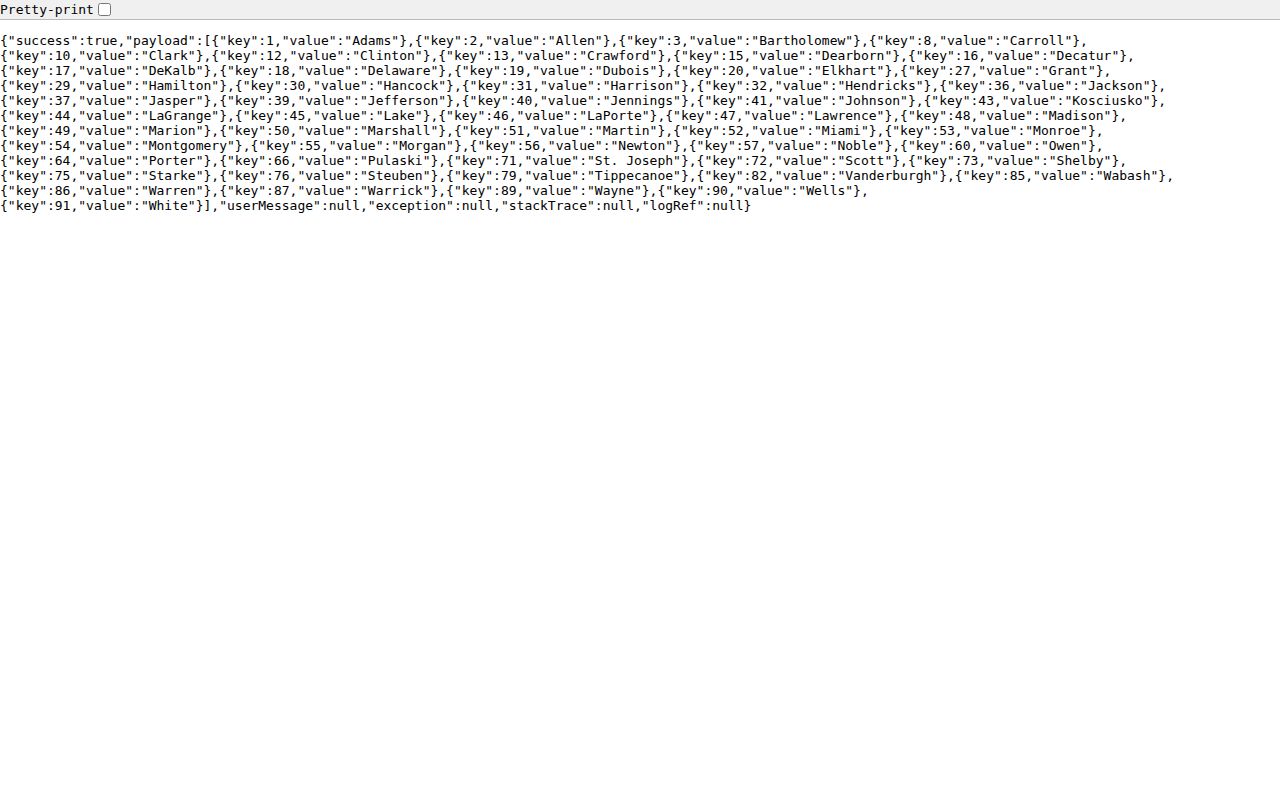
Picking the county does not mean Union Circuit Court publishes its docket through the tool. The official Union court-list request shows the next lookup step.
That response is a participation signal only, not a finding about whether a hearing exists on a case.
Union County Court Date Lookups
Begin with the exact case number if you have it. MyCase is the main online source for a single case. Search Union County. Open the right result. Read the hearing and CCS entries. Then confirm details with Susan Ray, Union County Clerk, at 765-458-6121 or clerk@unioncountyin.us. The office sits on the first floor at 26 West Union Street, Liberty, Indiana 47353. For courtroom and judge-schedule questions, contact Union Circuit Court. Call 765-458-5934.
- Search the case in MyCase by exact number or permitted name fields.
- Open the matching Union Circuit Court summary.
- Read the latest hearing entry, result, and cancellation fields.
- Call the Clerk or Circuit Court to confirm the current time and room.
- Ask at the Clerk counter when online details are missing.
- Use a specific records request for an older schedule or offline document.
The county offers no confirmed courthouse terminal, docket mail route, or daily printed calendar. Ask the Clerk whether those channels exist. Do not count on them until you ask. Want bulk compiled data? That request goes to the Office of Judicial Administration, not to automated collection from MyCase.
Union Court Calendar Controls
If Union joins later, the calendar form needs a county and a date. The court field stays grayed out until you pick a county. You can narrow the results. Use a case number or a case name up to 75 characters. Find Hearings runs the query. Reset just clears the form. Previous Day and Next Day move you within the allowed date window. If a search tops 100 hearings, only the first 100 are shown.
| Control | Use | Union caution |
|---|---|---|
| County | Select Union County | A county choice does not prove court participation |
| Court | Narrow to a participating court | No Union court returned during inspection |
| Date | Choose a day in the allowed window | Required for a date search |
| Name or number | Narrow a day's hearings | Confirm the match in MyCase |
| Reset | Clear filters | Does not alter a court event |
Court Settings: What Each Field Means
A setting is a scheduled event. It might be an initial hearing, motion hearing, pretrial conference, case-management conference, trial, or sentencing. Read every field together. The caption tells you the case, the description gives the reason for the setting, and the judicial-officer field names who handles that event. A start time with no room listed? Confirm it by phone.
| Date | The scheduled calendar day, subject to later change |
|---|---|
| Time | Starting and ending time with the displayed time zone |
| Case | Number and caption, often linked to MyCase |
| Court | The court holding the hearing, here normally Union Circuit Court |
| Setting type | Description or reason for the scheduled event |
| Officer | Judge or other listed judicial officer |
A calendar entry never states the outcome of a hearing. Look for a later CCS event or written order, and verify it with the Clerk when the result matters.
Union's Empty Calendar Result
The tool's available-court list is the clearest technical test of participation, and it lists Union County with no participating courts. Coverage can change if a court opts in or the technology is updated, so check the live product again instead of treating one result as final. The official available-court response documents the participation state.
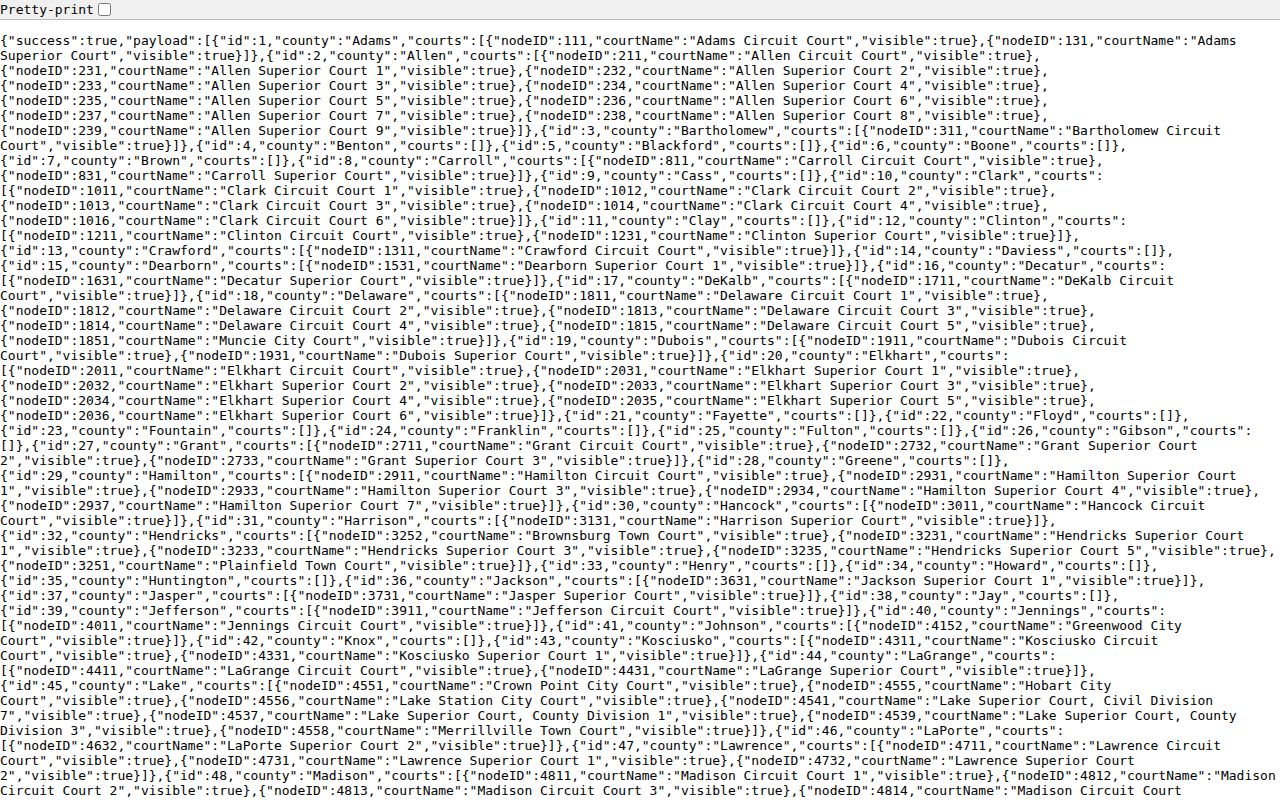
This result simply pushes a Union County searcher toward MyCase and a direct call to the court. It does not cancel, postpone, or disprove any setting.
When a Court Date Moves
A continuance pushes a court event to a later day. A reset gives the case a new setting. A cancellation drops the listed event, but it does not necessarily close the case. MyCase may list the original setting, a cancellation reason, and a later date as separate CCS events. Read them in order. Hunt for the newest entry. Calendar availability can shift too, whether from a holiday, a technical issue, or the court's participation choice. None of that means a case has ended. Union local rules schedule conferences in both criminal and civil matters, so labels matter. A civil case-management conference is not a trial. A criminal pretrial conference is not a final result. For a same-day change, a phone call beats any saved docket page.
Union Schedule and Case Search
MyCase is where a Union court-date lookup actually happens. Filter to Union County, then search by case number, party name, business name, or attorney. Field rules and the 1,000-result cap are covered in the full Union County docket search. Once the right case opens, match upcoming hearing entries against the newest CCS orders.
The schedule and the CCS do different work. One groups hearings by date. The other follows a single case through its filings, rulings, and settings. A linked document sometimes opens without an account. A missing icon, though, does not mean no order exists. Neither tool replaces a clerk-certified record.
Union Schedule Data Is Not Statistics
A hearing list for one day tells you who is due in court today. It is not the same thing as annual workload numbers. Indiana's ICOR system handles those. It publishes certified statistics broken out by county, court, year, and report, so the totals describe filing and disposition volume across a period rather than any single courtroom on any single morning. The ICOR county control shows the statewide reporting route. That official page is where certified reporting lives.
For a Union County case date, check MyCase or the Clerk; use ICOR only for court workload context.
Missed Settings and What Comes Next
Move fast once you miss a setting. Never assume the case was reset, dismissed, or decided. The docket alone will not settle that. Look for a new CCS entry in MyCase first. Then call the Clerk and Union Circuit Court. Ask what order was entered, whether another court date exists, and whether a filing or appearance is now required. Staff can share record and scheduling details, but they cannot give legal advice.
Confirm the official status: A calendar result, saved page, or prior notice may be stale. The newest court entry and direct court confirmation control the next practical step.
State sources will not cover a federal case. PACER and CM/ECF run on separate federal systems, and the official PACER route is reserved for federal records.
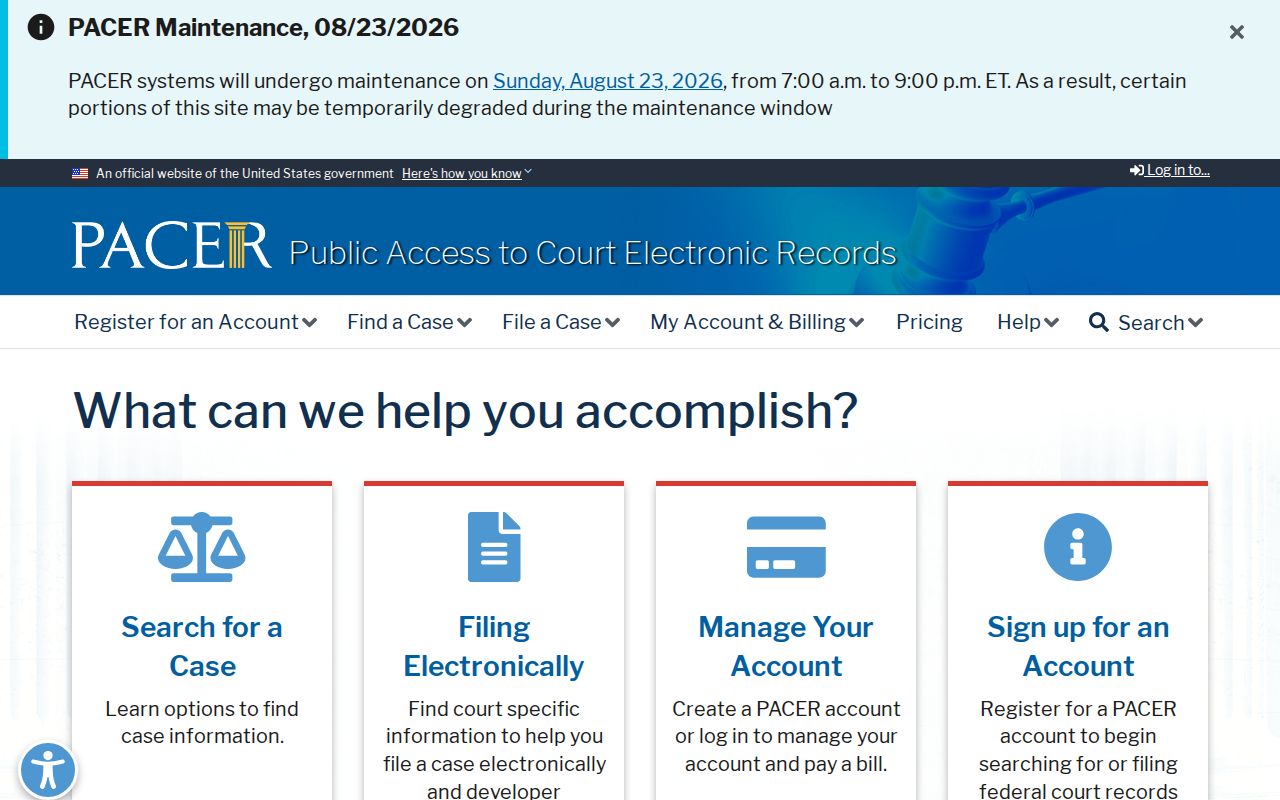
A state case stays in the MyCase, Clerk, and local Union Circuit Court chain. Only a distinct federal proceeding leaves that chain.
Union County Schedule Confirmation
Two offices split the work of confirming a Union County court date. The Clerk keeps the case record. The office can point to the latest CCS setting or the most recent filed order. Circuit Court staff handle the practical side, like the courtroom assignment and the judge's schedule. If the online views seem to disagree, write down the case number, the event label, the date, and the time before you call. Details help. Staff can then pull the right matter instead of working from a vague party-name guess.
Same-day confirmation matters most after a reset, continuance, cancellation, weather disruption, or a new order. A calendar image you saved last week may no longer match the current docket. When you call, staff can explain what the record shows and where a hearing stands. What they cannot do is tell you what legal step to take next. That counts as legal advice.
Union County Hearing Terms
Docket entries carry labels that mark each stage of a Union County case. An initial hearing, for example, is an early criminal event. A pretrial conference comes later. There the lawyers handle case preparation before a plea or a trial. Some Union civil personal-injury and medical-malpractice matters also get a case-management conference. It organizes witnesses, documents, discovery, settlement information, and later deadlines. Sentencing is its own animal. That setting follows a criminal disposition. Don't confuse it with a trial result on the court docket.
- Setting
- A scheduled court event shown in the CCS or calendar context.
- Continuance
- An order postponing an event to a later time.
- Cancellation
- Removal of that event, not automatic closure of the case.
- Disposition
- The outcome or closing action recorded in the case history.
Labels alone can mislead. Pair each hearing term with the latest order in the docket, and a routine conference or motion hearing won't be mistaken for the final proceeding.
Union County Historical Schedules
The live calendar covers a short date window, not long-term digging. For an older setting, start with the case's CCS. Historical docket entries can still show a hearing date, a result, a cancellation, or a later reset long after the calendar itself stops reaching that day. An event or order may not be linked. In that case, ask the Clerk for that specific nonconfidential record by name.
A good request names the case number. It also gives the approximate date and the type of schedule or order you want. Indiana's Access to Public Records Act asks for reasonable particularity. The county routes each request to the office holding the record. That is different from asking for every case heard over some undefined stretch of time. Compiled data on that larger scale is different. It may instead go through the Office of Judicial Administration under Administrative Rule 9.